
















Building Africa’s Future Scientists: Expanding Access to Authentic Research Experiences in Medicine and Healthcare
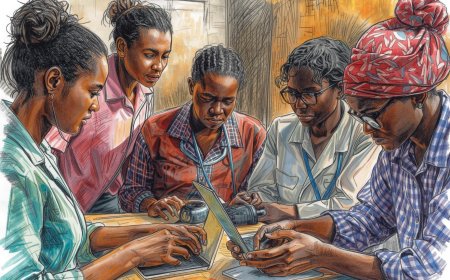
Authentic research experiences can transform African students and young scientists from passive learners into active innovators in medicine and healthcare. This feature article explores how Africa can build strong research pipelines—from high school classrooms to advanced laboratories—that unlock scientific potential, expand healthcare innovation, and address pressing public health challenges. It also outlines systemic barriers, opportunities, success models, and strategic recommendations for policymakers, educators, and health institutions.

Abstract
Africa faces an extraordinary opportunity: the chance to transform its rapidly growing youth population into a powerhouse of scientific innovation in medicine and public health. While many global systems train students to memorize scientific facts, the most effective learning emerges when young people actively participate in authentic research—using real tools, engaging real mentors, and solving real problems. This article examines why authentic research experiences are essential for developing Africa’s next generation of medical researchers, clinicians, and healthcare innovators. Drawing on current literature, case studies, and regional examples, it articulates barriers that limit research exposure and outlines a framework for building strong research pipelines from high school to university, to laboratories, to innovation ecosystems. Recommendations for educators, governments, health institutions, and policymakers are provided to ensure sustainable and equitable access to scientific careers across the continent.
1. INTRODUCTION
In recent decades, Africa has emerged as one of the world’s most dynamic regions for scientific potential. With nearly 60% of its population under the age of 25 (African Union, 2022), the continent holds a unique demographic advantage. Yet while Africa contributes nearly 17% of the global population, it produces less than 2% of global scientific research output (UNESCO, 2021). This disparity is especially pronounced in medicine and healthcare research, where the continent continues to face challenges such as limited research infrastructure, underfunded educational institutions, and a shortage of trained scientists and clinician-researchers.
A key part of this underproduction is structural: many African students encounter science primarily as theory—textbook diagrams, memorized formulas, and examinations that reward recall rather than innovation. But scientific thinking does not flourish through theory alone. It emerges from practice. When learners are allowed to work with real data, real laboratory tools, and real societal challenges—supported by mentorship and opportunity—they do not simply learn science; they become scientists.
This article advances the argument that Africa’s future scientific capacity depends on expanding access to authentic research experiences, especially in medicine and healthcare. Such experiences involve active experimentation, inquiry, problem-solving, collaboration, and exposure to scientific methodology within real-world contexts. They enable young people not only to understand scientific facts, but to generate new knowledge that addresses Africa’s pressing challenges, from infectious disease management to maternal health, digital health innovation, and genomic medicine.
Drawing from educational research, African case studies, and global best practices, this article outlines the importance of building strong research pipelines—spanning the journey from high school to university, to laboratories, to innovation ecosystems. These pipelines are essential for transforming Africa’s natural curiosity, creativity, and existing knowledge into innovations that improve population health, drive economic development, and shape the continent’s future position in global science.
2. WHY AUTHENTIC RESEARCH EXPERIENCES MATTER
2.1 The Difference Between Learning Science and Doing Science
Traditional education systems across Africa tend to prioritize examinations, theoretical curricula, and rote memorization. While these approaches build foundational knowledge, they often fail to cultivate scientific thinking skills such as hypothesis formation, experimental design, and critical analysis. Authentic research experiences bridge this gap by enabling learners to:
-
Identify real problems
-
Formulate research questions
-
Collect and analyze data
-
Use laboratory instruments and digital tools
-
Interpret results and draw conclusions
-
Communicate findings
-
Engage in collaboration and peer review
These processes develop scientific literacy, autonomy, and confidence in ways that classroom instruction alone cannot.
Studies have shown that students who participate in authentic research early in their education are significantly more likely to pursue STEM careers (Russell et al., 2007). In medicine, early research exposure improves diagnostic reasoning, clinical decision-making, and the ability to integrate evidence into practice (Murdoch-Eaton & Whittle, 2012). For Africa, where healthcare systems face complex challenges, research-trained professionals are critical for generating localized solutions.
2.2 Research as a Transformative Tool for African Healthcare
Authentic research experiences have unique relevance in Africa because the continent faces intersecting medical and public health challenges:
-
High infectious disease burden (HIV, malaria, tuberculosis)
-
Rising non-communicable diseases (diabetes, cardiovascular disease)
-
Maternal and child health disparities
-
Limited diagnostic infrastructure
-
Unequal access to medical services
-
Emerging threats such as antimicrobial resistance and climate-related health impacts
These are not theoretical issues. They require real-world innovation, contextual knowledge, and community-driven solutions—all of which arise from hands-on research experience.
Moreover, Africa’s genetic diversity offers unique opportunities in genomic medicine, pharmacology, and epidemiology. However, without strong research pipelines, the continent risks being a consumer rather than a producer of knowledge (Tindana et al., 2019).
Authentic research experiences empower African scientists to lead in:
-
Developing vaccines and diagnostics
-
Understanding disease patterns
-
Innovating medical technologies
-
Improving anesthesia, emergency medicine, and surgical care
-
Designing digital health systems
-
Producing culturally relevant health interventions
These contributions not only improve healthcare outcomes but also position Africa as a global scientific partner rather than a research subject.
3. THE CURRENT STATE OF RESEARCH EDUCATION IN AFRICA
3.1 Structural Barriers
Despite growing interest in innovation, several systemic challenges limit access to authentic research opportunities:
3.1.1 Limited Research Infrastructure
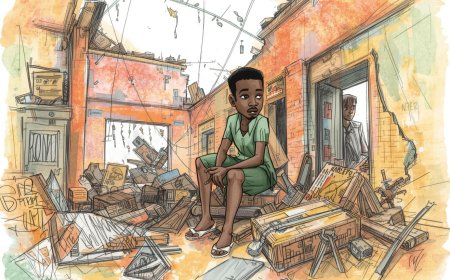
Many high schools and universities lack functional laboratories, scientific equipment, or stable electricity. Laboratories that do exist are often outdated or insufficient for modern biomedical research.
3.1.2 Shortage of Qualified Mentors
African universities face high student-to-faculty ratios, while many experienced researchers migrate abroad due to better funding and career prospects. As a result, students rarely receive personalized mentorship.
3.1.3 Funding Constraints
African countries invest only 0.5% of GDP in research on average—far below the global target of 1% (UNESCO, 2021). This limits opportunities for undergraduate research, laboratory development, and scientific competitions.
3.1.4 Overloaded Curricula
Secondary and tertiary curricula often prioritize exam preparation, leaving little room for inquiry-based learning or independent research projects.
3.1.5 Inequity and Gender Disparities
Girls, rural students, and learners from low-income backgrounds disproportionately lack access to STEM programs and mentorship opportunities.
3.2 Emerging Success Stories
Despite these barriers, inspiring models across Africa demonstrate the power of authentic research exposure:
-
The African Institute for Mathematical Sciences (AIMS) trains students through research-based instruction.
-
The H3Africa Initiative supports genomics research led by African scientists.
-
STEM education programs in Kenya, Rwanda, Ghana, and South Africa incorporate robotics, coding, and biomedical research.
-
African universities collaborating with global institutions have increased access to lab internships and medical research training.
These examples show that investing in authentic research experiences generates measurable outcomes: increased publication rates, new innovations, expanded scientific literacy, and stronger healthcare solutions.
4. THE RESEARCH PIPELINE: A CONTINENTAL STRATEGY FOR SCIENTIFIC GROWTH
To unlock Africa’s scientific potential, the continent must develop strong, interconnected research pipelines:
High School → University → Laboratories → Innovation → Impact
4.1 High School Level: Igniting Curiosity Early
4.1.1 The Importance of Early Exposure
Research shows that career aspirations are formed early—often before age 15 (OECD, 2019). Without exposure to real science at this stage, many African learners never consider research or medicine as viable pathways.
4.1.2 Practical Steps for High School Research Integration
-
School-based research clubs
-
Science fairs and competitions
-
Partnerships with universities and hospitals
-
Access to low-cost scientific tools such as microfluidics kits or mobile microscopes
-
Teacher training programs in inquiry-based learning
These interventions equip students with curiosity, confidence, and early scientific identity.
4.2 University Level: Transitioning from Learners to Researchers
4.2.1 Undergraduate Research Programs
Universities must build structured research pathways that include:
-
First-year research experience (FYRE) courses
-
Undergraduate research assistants
-
Thesis projects grounded in real community health problems
-
Cross-disciplinary collaboration between medical and engineering faculties
4.2.2 Research Culture and Mentorship
A strong research culture requires:
-
Faculty incentives for mentoring
-
Student research conferences
-
Peer-mentoring networks
-
Journal clubs and writing workshops
These environments help students cultivate analytical skills and professional identity.
4.3 Laboratories: The Heart of Innovation
Laboratories are where scientific ideas become real outcomes. Africa must expand access to:
4.3.1 Basic and Advanced Laboratory Infrastructure
-
Molecular biology labs
-
Public health and epidemiology units
-
Clinical research spaces
-
Biomedical engineering workshops
4.3.2 Shared Research Facilities
Centralizing high-cost equipment accessible to multiple institutions ensures sustainability.
4.3.3 Ethical and Responsible Research Training
African scientists must be equipped to lead ethically sound research, particularly in health studies involving human participants.
4.4 Innovation Ecosystems: Turning Research Into Impact
Research must extend beyond academic publications. Africa needs:
-
Medical innovation hubs
-
Start-up incubators
-
Technology transfer offices
-
Partnerships with hospitals and health ministries
-
Funding pipelines for prototypes and commercialization
When students see their research solve real community problems, they are empowered to become healthcare innovators.
5. RESEARCH IN MEDICINE AND HEALTHCARE: AFRICAN PRIORITIES
5.1 Infectious Disease Research
Africa is uniquely positioned to lead in infectious disease research due to its proximity to epidemiological challenges. Authentic research opportunities in this field include:
-
Vector surveillance projects
-
Diagnostic assay development
-
Clinical trials in partnership with hospitals
-
Vaccine development and evaluation
Empowering students and early-career researchers in these areas builds local capacity and reduces dependency on foreign solutions.
5.2 Genomic and Precision Medicine
Initiatives like H3Africa have demonstrated Africa’s critical role in genomic research. Opportunities include:
-
Bioinformatics research
-
Population genetics
-
Pharmacogenomics
-
Disease susceptibility modeling
Access to genomic research tools at undergraduate and graduate levels enables Africa to contribute to global scientific knowledge while addressing local health disparities.
5.3 Digital Health and AI-Driven Research
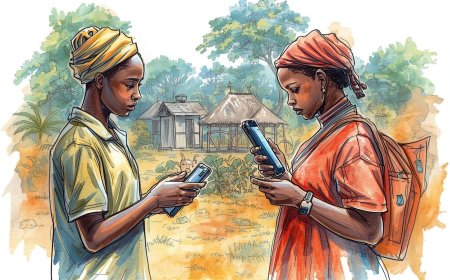
Africa’s rapid mobile penetration and young tech-savvy population make digital health an ideal field for student research. Examples include:
-
Mobile diagnostics
-
AI-driven disease prediction models
-
Telemedicine innovation
-
Data science for public health
Innovations in these areas can strengthen health systems while creating research-driven career paths.
5.4 Maternal, Neonatal, and Child Health Research
Students can contribute to research addressing:
-
Obstetric risk prediction
-
Nutrition and growth monitoring
-
Child development interventions
-
Community-based health programs
Hands-on research in this domain directly contributes to reducing mortality rates.
6. BUILDING SYSTEMS THAT ALLOW AFRICAN YOUTH TO THRIVE
6.1 The Role of Governments
Governments must:
-
Increase research funding
-
Integrate research into national education policies
-
Provide tax incentives for private research investment
-
Establish national science mentorship programs
6.2 The Role of Universities and Medical Schools
Universities must:
-
Build laboratories
-
Reward research productivity
-
Invest in faculty development
-
Foster international partnerships
6.3 The Role of Hospitals and Health Institutions
Hospitals must become research-friendly environments by:
-
Hosting student interns
-
Supporting clinical research units
-
Encouraging physician-researchers
-
Funding pilot studies
6.4 The Role of NGOs and International Partners
Partners can provide:
-
Grants
-
Training programs
-
Exchange opportunities
-
Laboratory equipment
But African ownership must remain central.
6.5 The Role of the Private Sector
Healthcare companies, biotech firms, and tech hubs can:
-
Sponsor research competitions
-
Host innovation challenges
-
Offer internships
-
Establish R&D labs
This connects scientific training with employment opportunities.
7. A VISION FOR THE FUTURE: AN AFRICA WHERE EVERY STUDENT CAN BECOME A SCIENTIST
Imagine an Africa where:
-
Every high school has a research club
-
Every university student participates in laboratory research
-
Every hospital hosts clinical research teams
-
Every innovation hub collaborates with scientists
-
Every community benefits from locally developed healthcare innovations
This vision is not aspirational—it is achievable.
The ideas already exist.
The curiosity already exists.
The potential already exists.
Our responsibility is to build the systems that allow it to thrive.
8. CONCLUSION
Authentic research experiences represent a transformative opportunity for African education, medicine, and healthcare. By shifting from passive theory-based instruction toward practice-based scientific engagement, Africa can cultivate a generation of researchers and innovators equipped to address its most pressing health challenges. Developing a continent-wide research pipeline will require systemic investment, cross-sector collaboration, and a commitment to equity. But the rewards—improved healthcare outcomes, stronger scientific capacity, and empowered youth—are immense.
Africa’s scientific future depends on the decisions made today. If we create environments where students can explore, experiment, and innovate with real tools and real problems, they will not merely learn science—they will shape the future of science.
References
African Union. (2022). Africa’s demographic trends and implications for development. AU Commission.
Murdoch-Eaton, D., & Whittle, S. (2012). Generic skills in medical education: Developing the tools for successful lifelong learning. Medical Education, 46(1), 120–128.
OECD. (2019). The future of education: Developing career aspirations in early adolescence. Organisation for Economic Co-operation and Development.
Russell, S. H., Hancock, M. P., & McCullough, J. (2007). Benefits of undergraduate research experiences. Science, 316(5824), 548–549.
Tindana, P., Molyneux, S., & Bull, S. (2019). Ethical issues in genomics research in Africa. BMC Medical Ethics, 20, 14.
UNESCO. (2021). Science Report: The race against time for smarter development. United Nations Educational, Scientific and Cultural Organization.
What's Your Reaction?
 Like
0
Like
0
 Dislike
0
Dislike
0
 Love
0
Love
0
 Funny
0
Funny
0
 Angry
0
Angry
0
 Sad
0
Sad
0
 Wow
0
Wow
0